




 Technical Service
 Need help? Our team of experienced experts is here for you with full support.
Cat. No.
AKA-347
CAS No.
68506-86-5
MF
C6H11NO2
MW
129.16
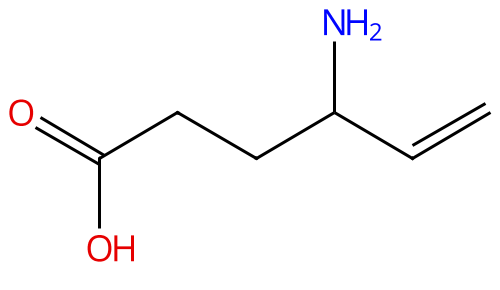
Vigabatrin is a vinyl derivative of the inhibitory neurotransmitter GABA. It is an active and irreversible inhibitor of GABA transaminase.
Need help? Our team of experienced experts is here for you with full support.
Vigabatrin
68506-86-5
C6H11NO2
129.16
98%
Selectively and irreversibly inhibits GABA-transaminase (GABA-T)
This product is intended solely for scientific research or regulatory filing purposes. We do not provide products or services to individuals, please strictly comply with all applicable laws, regulations, and the committed use. Use for any other purpose is strictly prohibited.
Vigabatrin is a vinyl derivative of the inhibitory neurotransmitter GABA. It is an  active and irreversible inhibitor of GABA transaminase.
Packing: 1kg/bag; 25kg/drum or as request
Availability: DMF preparation & filing in progress
Can't find the right version? Our team of experienced experts is here for you with full support.Contact Us
* Some statements have not been evaluated by national authorities.
* Some products are not intended to diagnose, treat, cure, or prevent any disease.
* For literature supporting, please contact us directly.